Solids?

Carly Mul • March 21, 2026

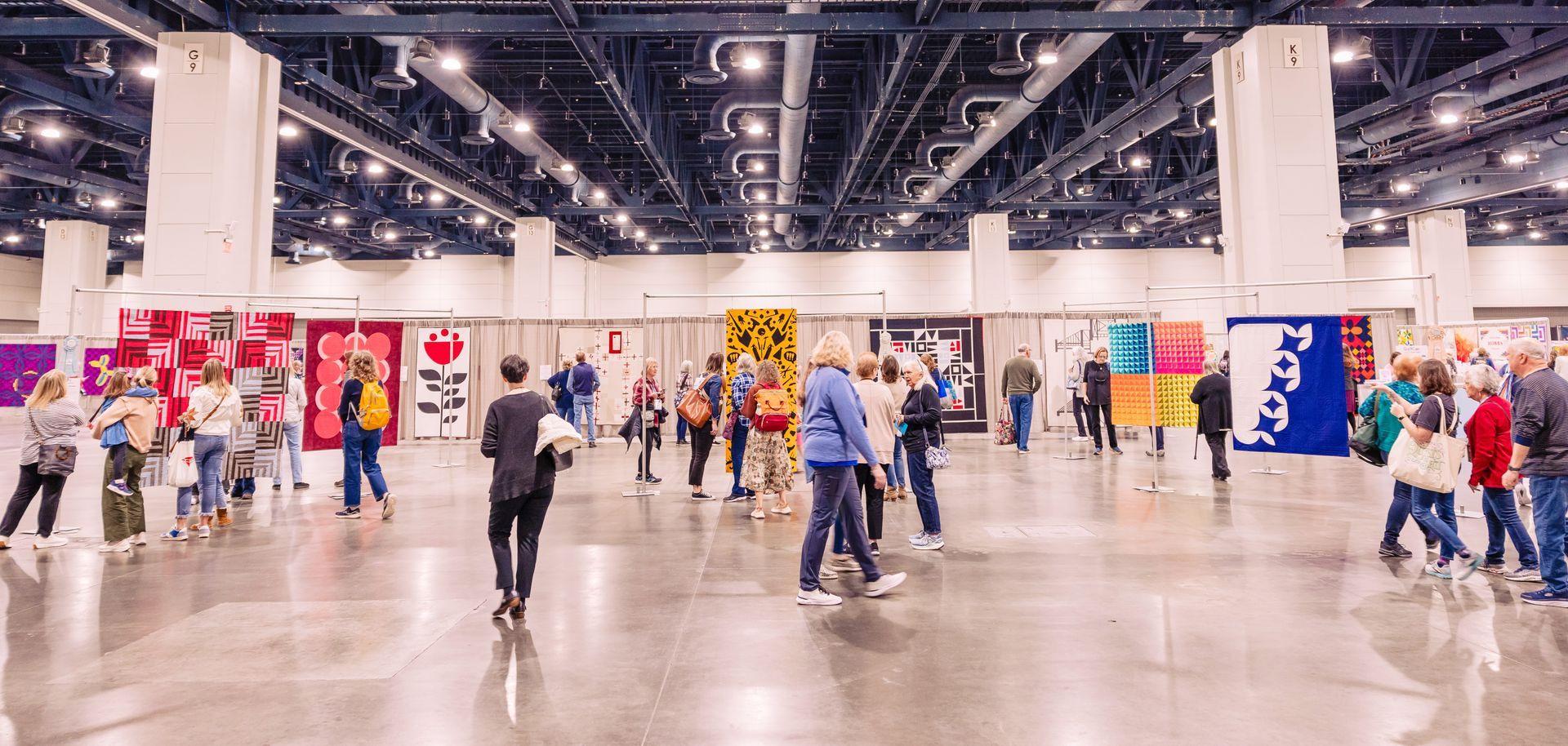
It is no secret that modern quilters love to work with solids. It has been their choice of fabrics now for a long, long time, and QuiltCon 2026 showed again the dominance of solid fabrics. I don't think I saw any winners with prints!  It is almost as if it is a requirement to work with solids to be considered "modern". Lately, especially the desire to create random shapes, not only curves, is coming up with improvisational piecers.  The lack of print makes it possible for them to focus on the created shape only. A print would add challenges of a different kind, maybe even a distraction? So far, most think so.


 Modern Quilting is not the same as contemporary or today's quilting. There are other new forms of working with fabrics as well, like some art quilting and some forms of collage. We are seeing quilts now that 10 year ago would not have come into existence.  There are many more mixed media products now, the fusibles have become better, new kinds of interfacings. Combined they all opened up doors that are not so much visible with the Modern movement but more with contemporary Art Quilters. These fiber artists have an enormous impact on the art world in general as fiber art is more and more present at art venues. You see  contemporary piecing, foundation piecing, and applique with prints as well, but all at a much smaller scale. I personally love the creativity of Allie McCarthen (www.exhaustedoctupus), who is someone with a completely unique voice and who hardly uses solids. So new and modern can go hand in hand, but don't have to. There is  modern/new, modern/not new and not modern/new (and of course also not modern/not new).


The fabric industry is looking at the use of solids with mixed feelings: of course it is wonderful to see the enthusiasm of Modern Quilters. QuiltCon is definitely a sign that sewing is alive and well. The 2026 show attracted 29.000 visitors and was the largest QuiltCon ever. To put things in perspective: International Quilt Festival record stands above 50.000 visitors! On the other hand: the industry creates  thousands of fabrics that are not getting picked up by the Modern Quilter. Designers of fabric, also contemporary ones, are having a hard time connecting with the Modern Quilt movement as it is so laser focussed on solids.  Each company has a certain number of solids, but they have much more in non-solids. It is a challenge and there are all kinds of ways they are trying to expand interest.  When I started quilting, there were reproduction fabrics, traditional fabrics, novelty fabrics and contemporary fabrics.  Solids were at the time the cheapest and most basic fabrics you could find. Not really a quilting favorite. I think that list is at this moment slightly different: reproduction fabric, traditional fabrics, art fabrics, novelty fabrics, contemporary fabrics and solids.  It shows how much is just not being used by the Modern movement. All these main categories have fine lines and some collections could fit in more than one category.


Maybe it is interesting to read what I have noticed recently in solids. 

If we define solids as one-color fabrics, there is a lot of variation.

First of all, they are not all the same. Even in the flat solids, we have different qualities in the cotton. Some solids feel very smooth, some are pretty rough and tend to fray. Art Gallery Pure solids, Michael Miller Cotton Couture (they recently added 74 new colors) are the higher end ones. Kona and Moda Bella Solids are more basic. Every company makes solids and most have ranges between 100-400 colors. That is a lot and most quilt shops carry for that reason only one line of solids. Most don't have the complete line in stock, so it is hard to get a good picture of the possibilities in color nuances. Some companies are stronger in neutrals, but not so much in brights. Some have an excellent range in blues, but yellows are limited. It is really worth spending some time taking a close look at solids before you make a decision. Online resources and color cards can help out. Unless you have a specific reason, you can always mix them.


 Then there are solids that have a little bit of design because of the way they are produced. Most batik solids, due to the way batiks are being produced,  have some color changes in them. Hoffman's 1895, Robert Kaufman's Prisma,  and batiks from Timeless Treasures, Benartex and Anthology.

 I carry on my website collagefabric.com the entire collection of Palette by Marcia Derse and this collection also has some color changes because they started out as hand-stamped fabrics. Still we can call them solids.  Personally I have a lot of different solids, but I find myself going to Palette most of the time because of its saturation. It makes many others dull. I use Palette for my Agamy Stripe class and people can buy a kit. It is just amazing to see the difference in results between the  "kit people"  and those that brought in their own solids. The stripes look so much more vibrant in Palette. Last month Palette got expanded with 25 new colors, bringing the total to 125 colors! I'm glad to have them all!
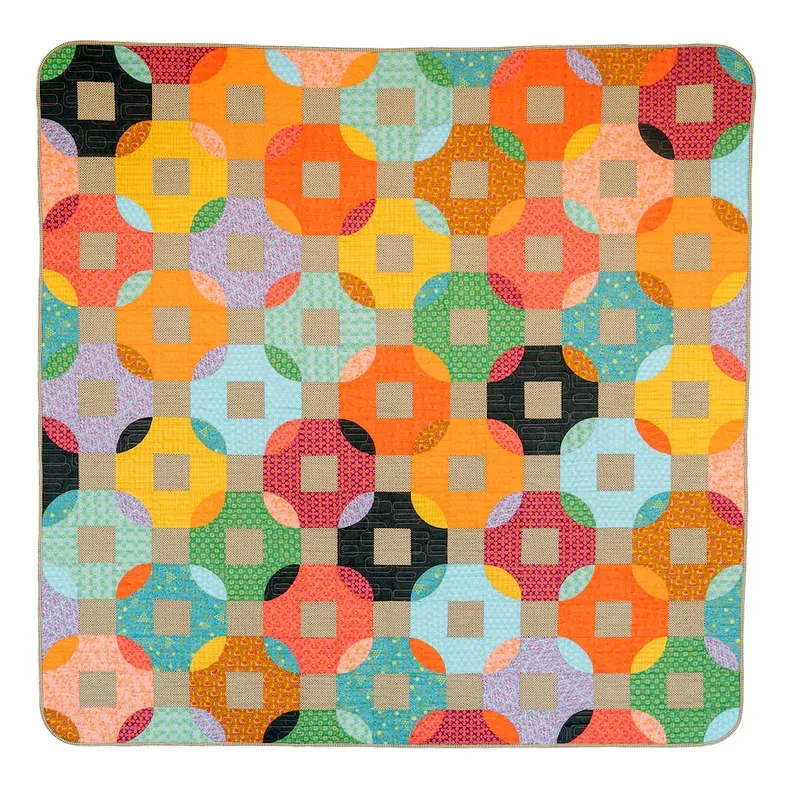
Lately we see "solids" also show up in new ways. This is what stands out to me.

The so-called "near-solids" are not really solids. They are fabrics with a tiny design on them that look from a distance as solids, but a close up view will reveal a little design every now and then. Often randomly placed. Near-solids or minimal solids as they are called sometimes, used to be considered blenders, but the big difference is that blenders are always related to a more important fabric that the blender is supposed to support. Near solids are stand-alone fabrics. The idea is that they are not supporting other fabrics, but that they can be used as an alternative for a pure solid.  They are considered to be interesting enough to work without other prints. Of course, this is a fine line. When is it a blender, when is it a near-solid? The maker decides but with near-solids we look at how a fabric is being used. Good samples of near-solids can be found in the collections of Sew Kind of Wonderful. The pattern Soft Focus for instance looks from a distance as all solid fabrics, but a close up reveals the collection Popcloth. That collection is not a true solid.

Alison Glass will come out with Color Camp in August of this year and that collection is another sample.


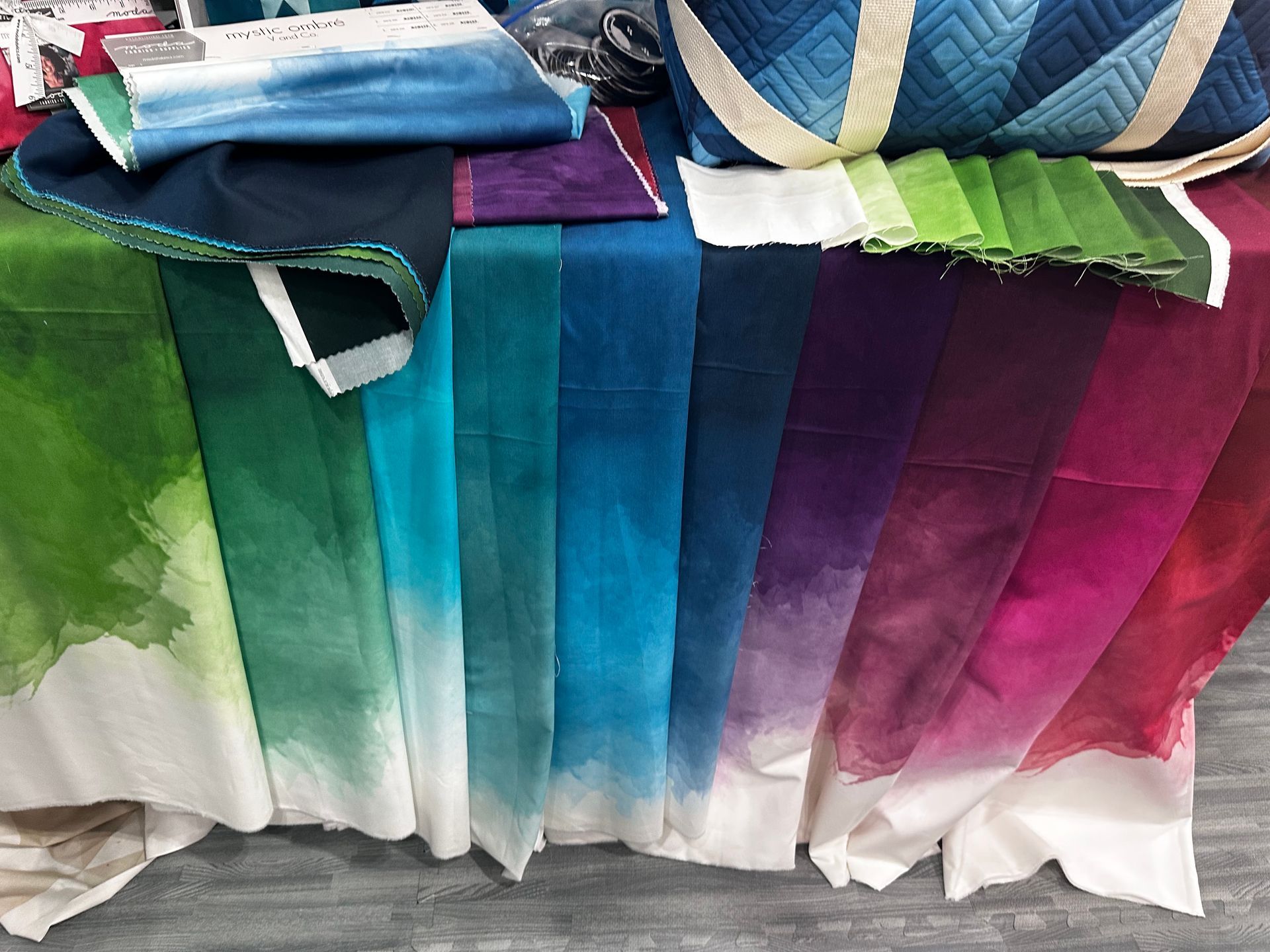
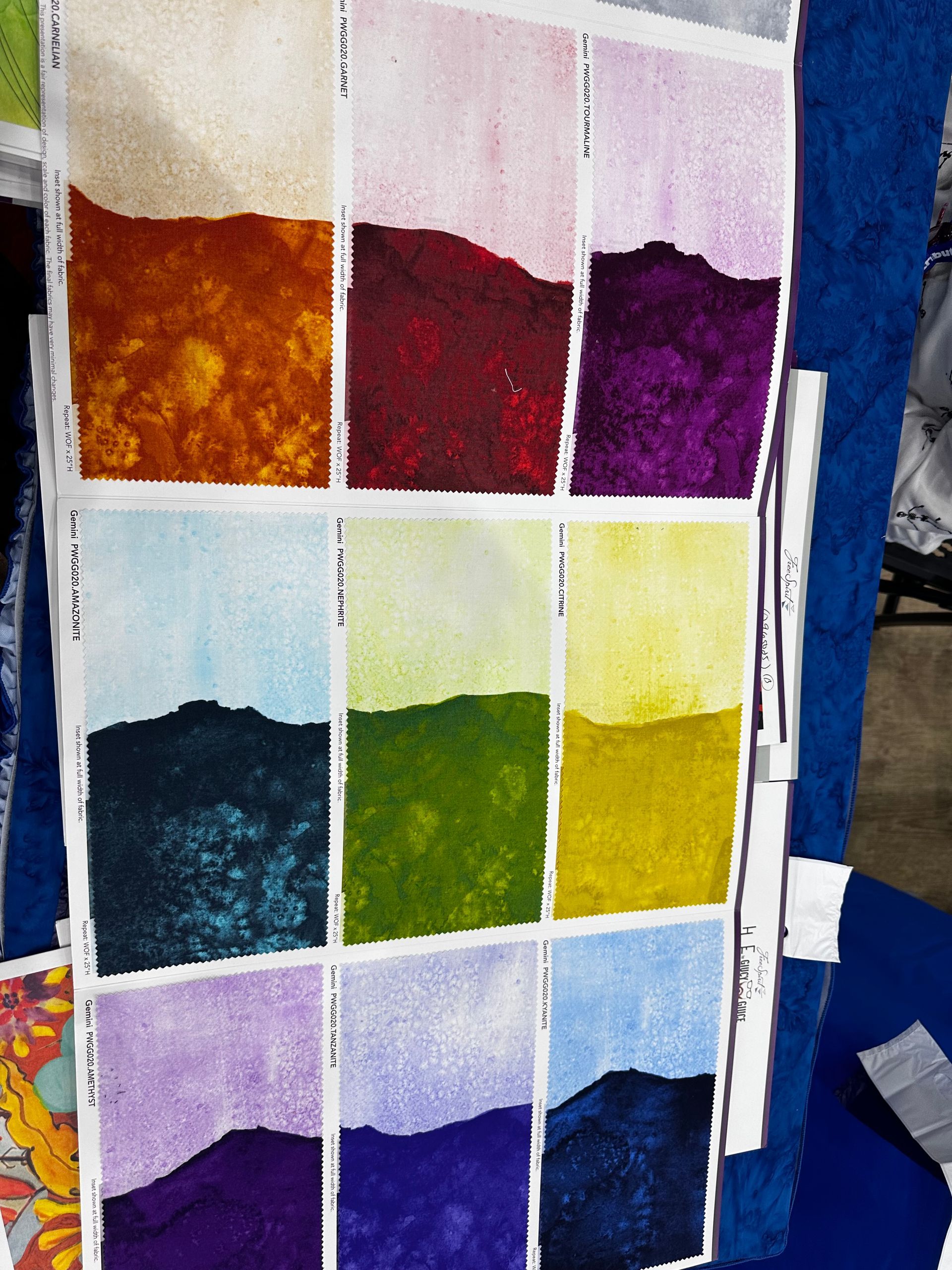
 "Solids with texture"  are fabrics that are almost solid in the sense that the fabric is one color, but a certain movement has been added to the solid. They are not flat. Guicy Guice is coming out with a collection in May that has a very organic line in between the two clouded solid colors. It is called Gemini and it has fantastic options for contemporary shape cutting. V and Co for Moda will come out with a new Ombre - Mystic Ombre - that has a design change from the main color into white. These are truly new design ideas that could open up a world for new quilts. Most ombres find a home with art quilters, but I think improvisational "Modern" quilters could look at this as well. 

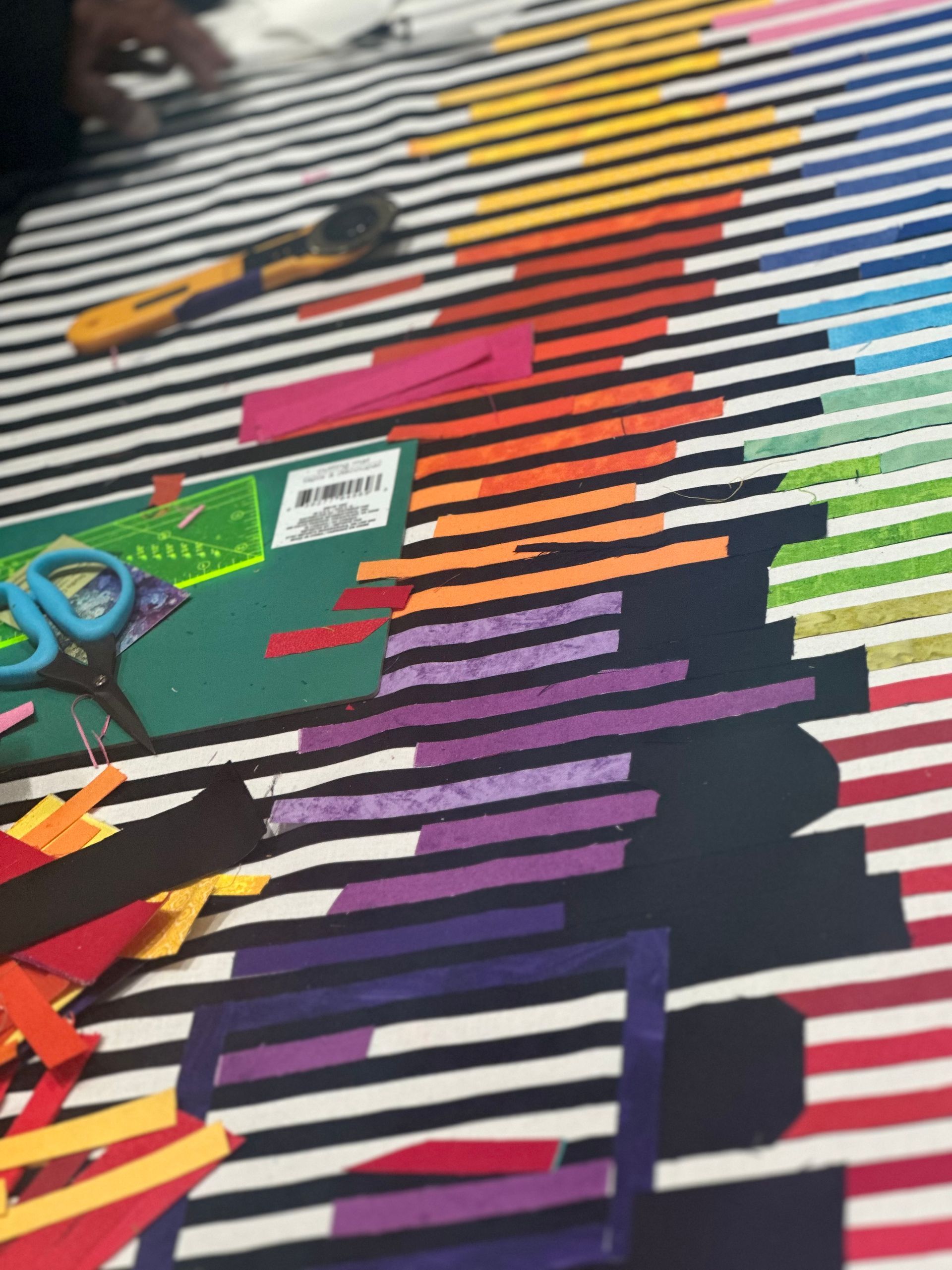
Mirage by Northcott is a new collection that fits in this group and as this one is so excellent for my kind of collages I ordered the entire collection. It arrived yesterday! I'm  always looking for good colors with movement and texture  for making my lines in color and Mirage is bringing both. By the way, I do sometimes work with pure solids, but I do this (so far) only to create a contrast with the more textural prints. My quilts, the Crack and Growing Color are some samples.


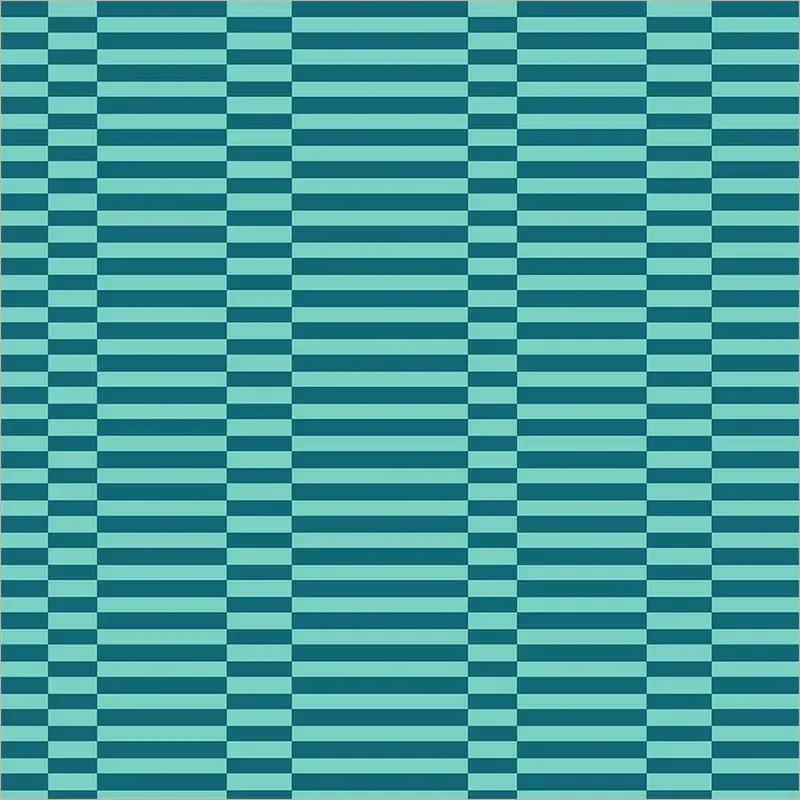
 When you combine two or more solids in cuts that have the same direction, a stripe is being created.  You can make your own stripes in solids, but many fabric companies are adding a ready to go stripe fabric to a collection.  Stripes are popping up everywhere! A good sample is Annabel's Blenders by Windham or the new Tango Collection by Anna Maria Textiles (coming in August 2026).

One step up are plaids that make the stripe go in two  directions. We definitely see more plaids as well.


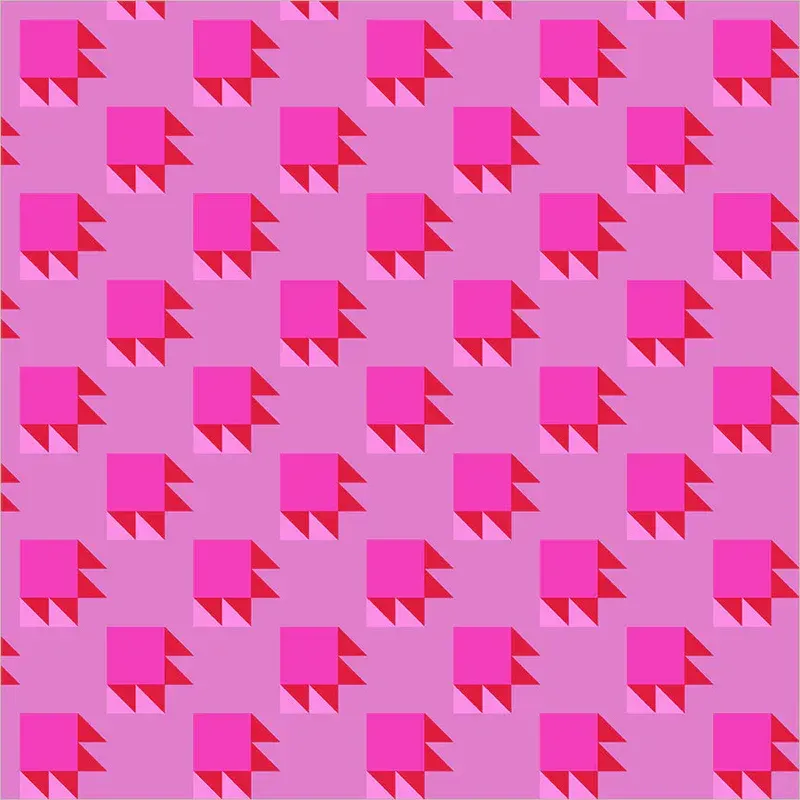
"Designed with solids" are fabrics that are using the flat look of solids but still make a design. Many of the newest contemporary collections fall in this category. The fabric has a design but no design elements like dots, speckles, stripes and also no texture. There is enough space in the design to see solid colors. These fabrics have been around for a while, but there are clearly many more at the moment. See for instance the Bear Paw block in Annabel's Blenders for Windham.

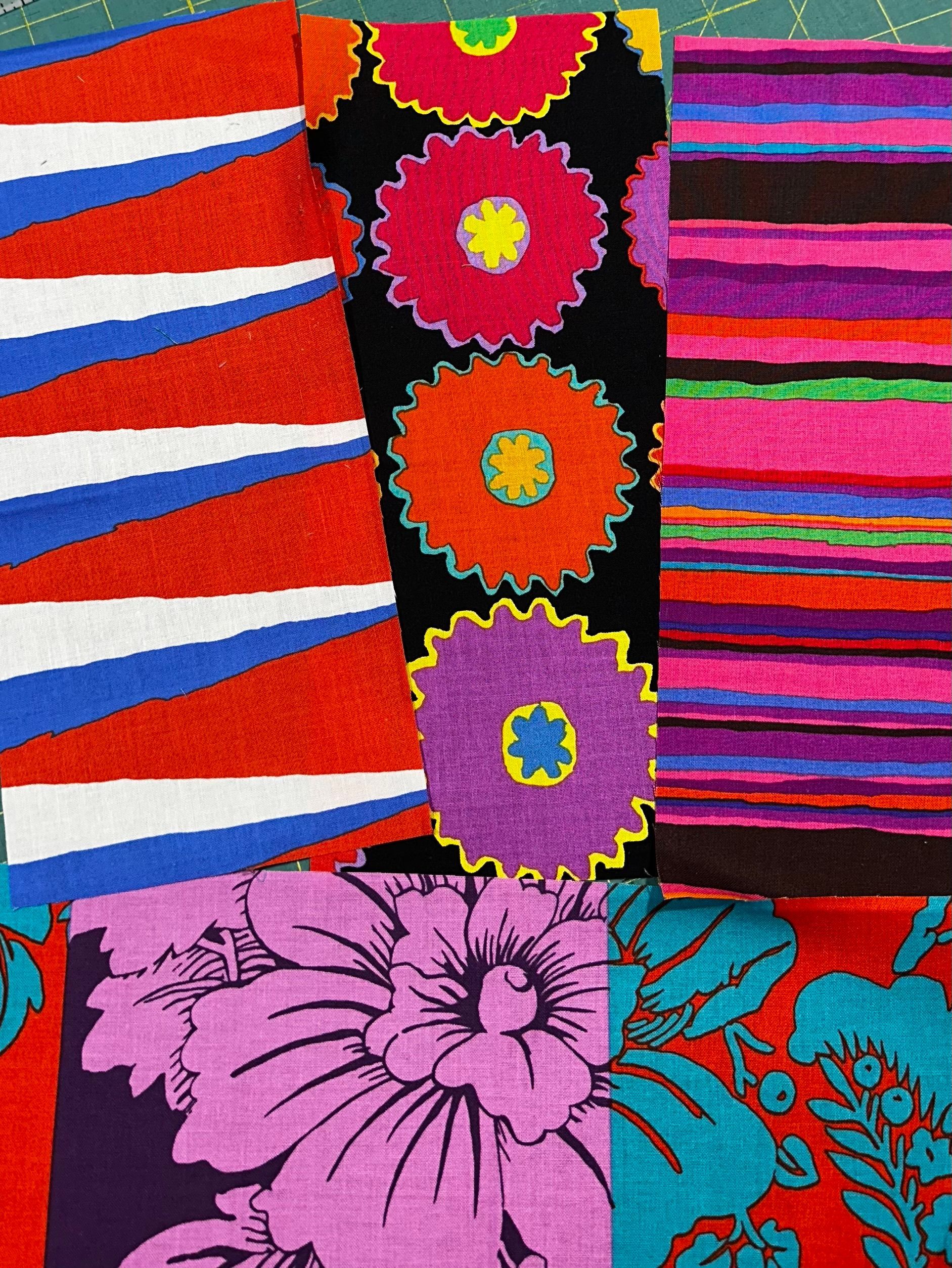
Even the newest Kaffe February 2026 collection has those kinds of fabrics!


 Textured woven solids are fabrics that have one color but the fabric is not regular 100% cotton.  A more loosely woven solid opens up different possibilities. It's easier to make garments, easier to do hand embellishing.  Here we see another effort to get new solids.

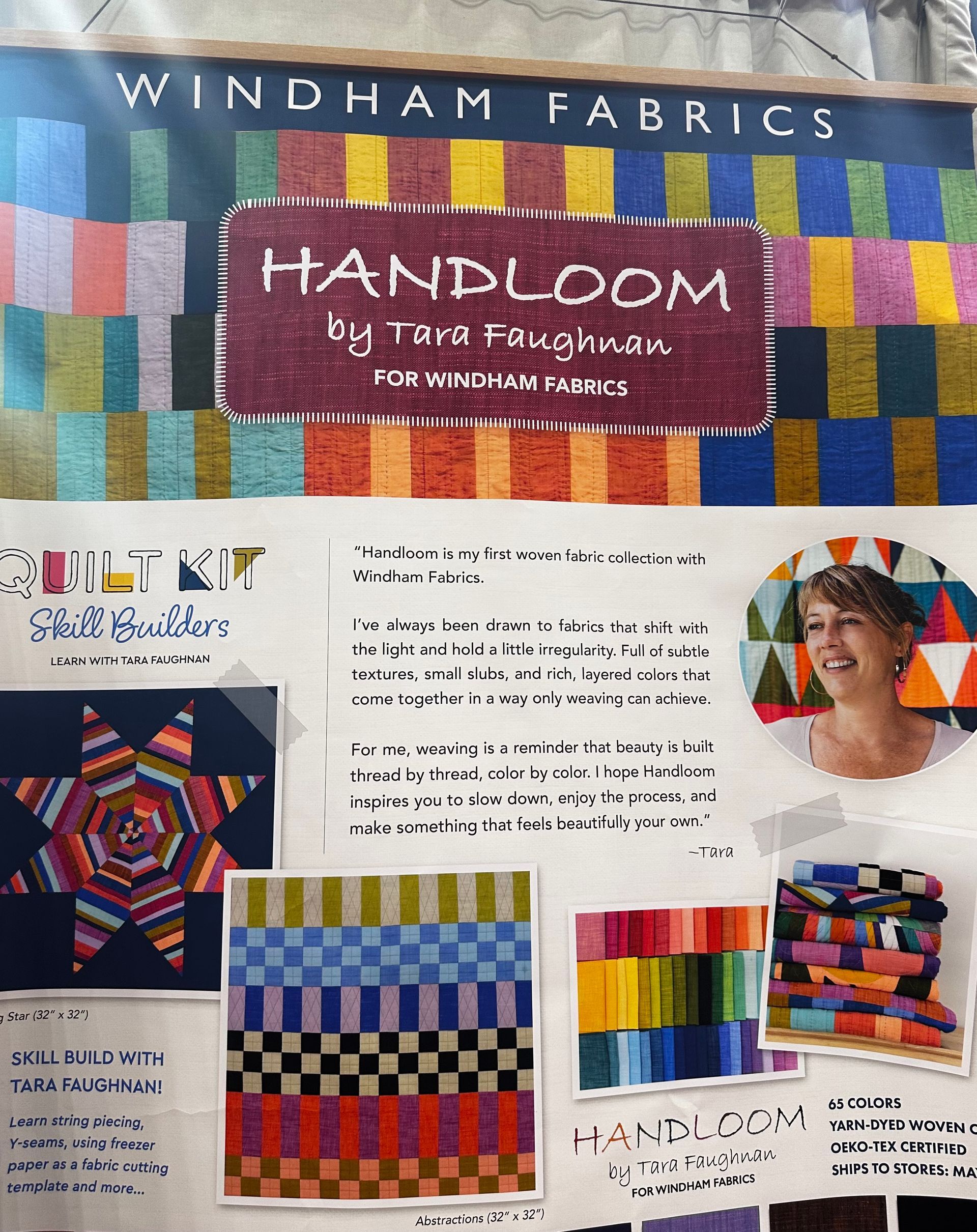
We already had the Kaffe shot cottons and Artisan solids by Windham. Figo fabrics came out with Space Dye yarn wovens two years ago and Andover has consistently expanded  the Cottage Cloth collection by Renee Nanneman. Now, Windham just launched "Handloom" with Tara Faughnan. The texture is super soft and "slubby".  Clearly with the  upcoming H&H market as well,  fabric companies are trying to reach out to new markets and unite general sewists, bag makers, garment makers with the quilting world. I'm not even mentioning here crossovers to other materials like linens and wools!

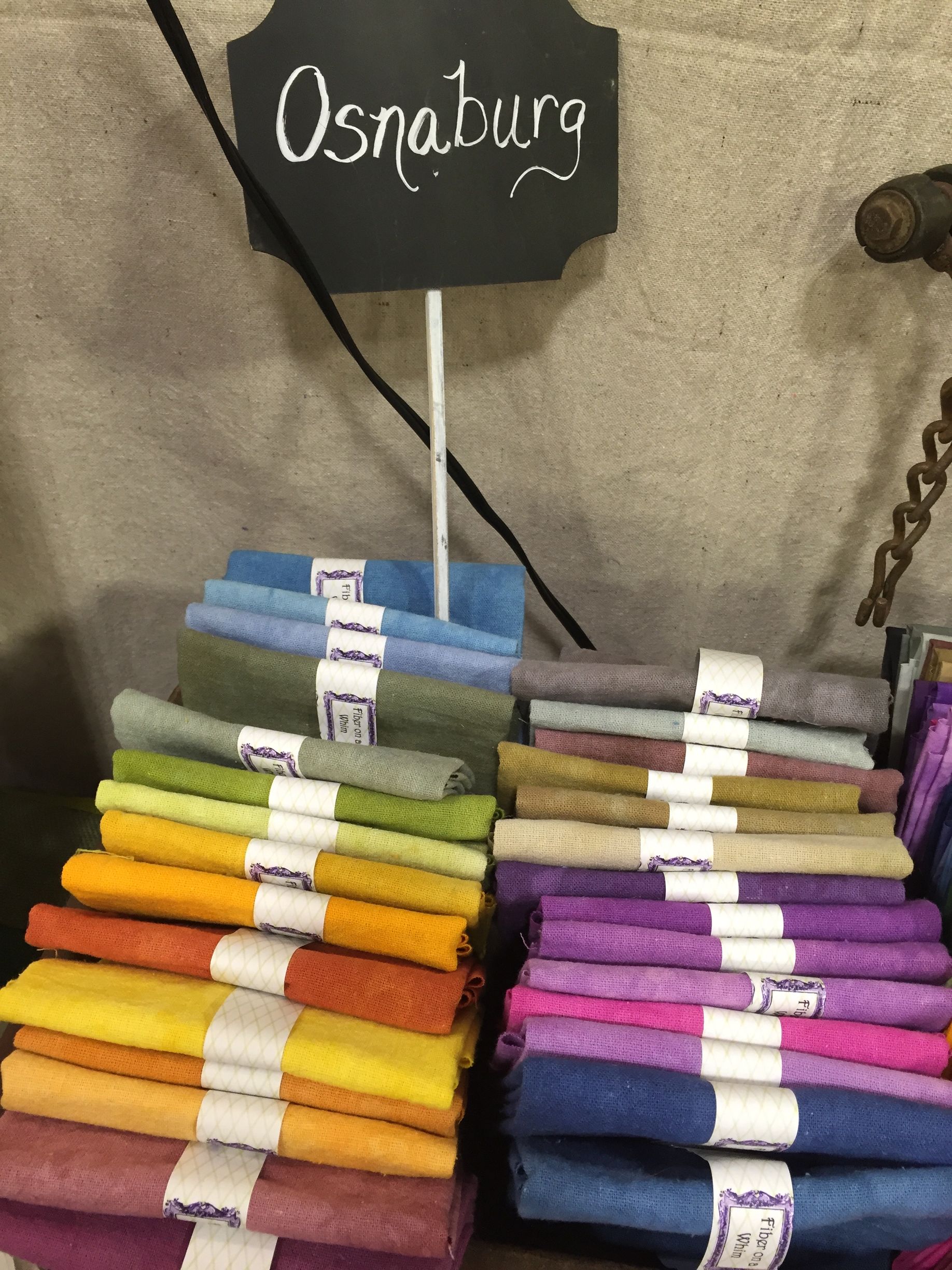
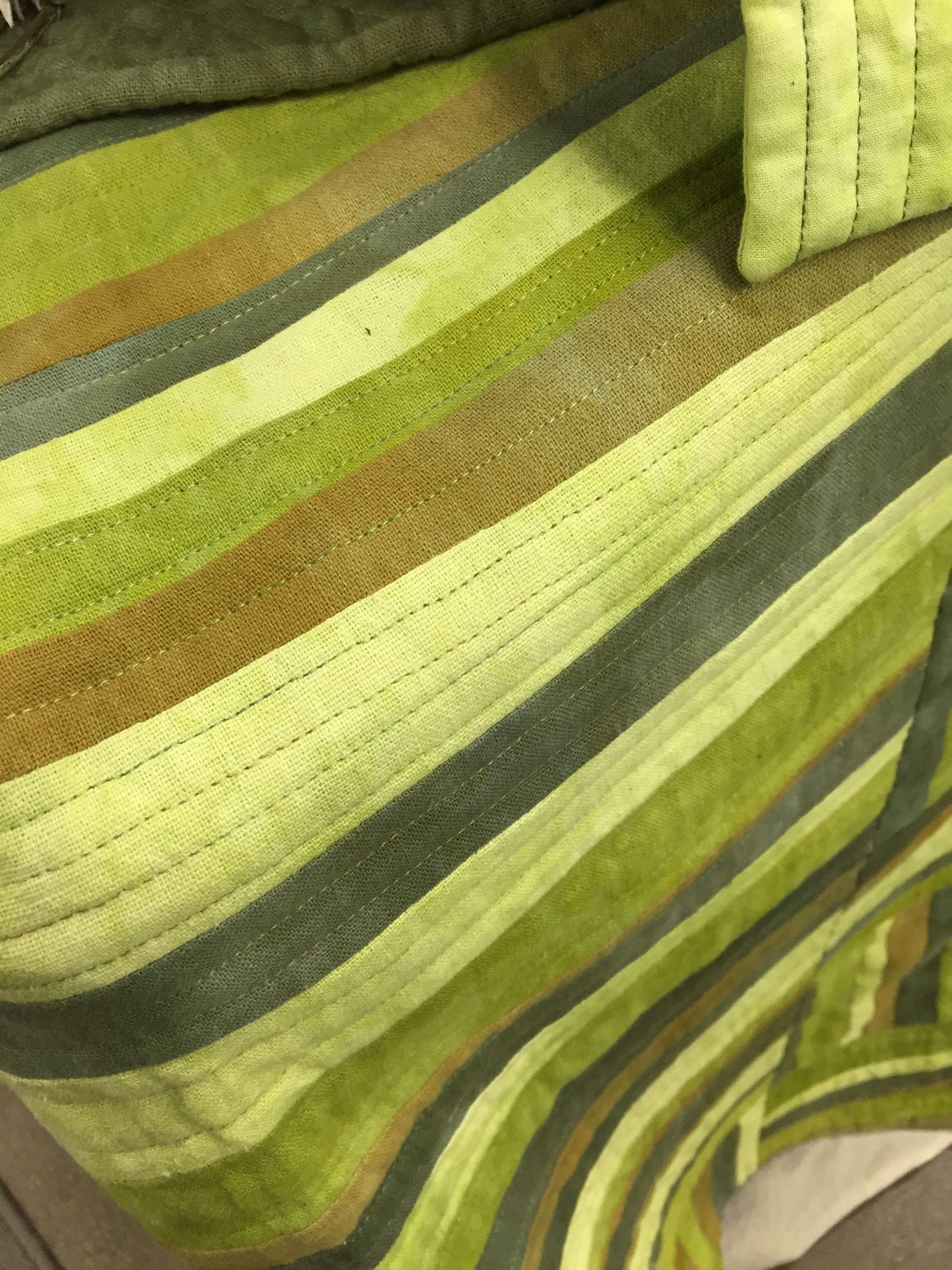
All this is not new. When I was clearing up some space on my iPhone, I  found this photo of Osnaburg (see below)  that I had taken at Quilt Market 2015.  It looks pretty modern 11 years later! At that time  Osnaburg was presented as a more alternative look in fabric. "Eco fabric" was a term, bio friendly, natural dyes. It didn't make any connection with solids at that time. The newest textures in solids don't mention any environmental considerations. They try to draw from today's popularity of solids.  They want to be considered as solid as the other solids, not standing out too much but just enough to give a maker a reason to buy it.   Will it work?  

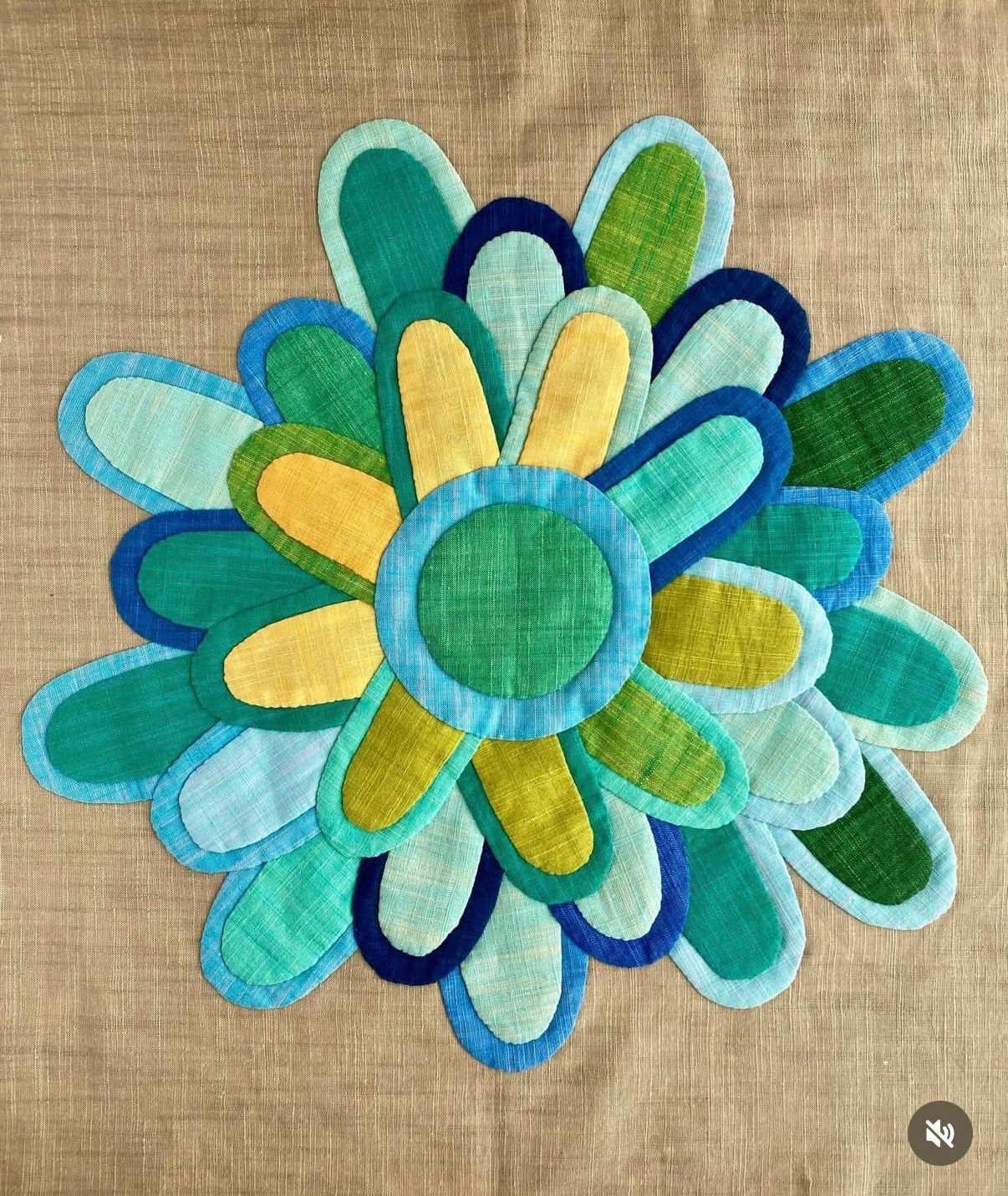
The first creations are showing up on social media: Jo Avery, a super creative quilter from the UK, showed on her Instagram this picture where she is making the petals with Handloom.  I find this all so interesting!